
Managing ESG Data in SugarAI in a Structured Way
The KINAMU ESG add-on extends Sugar with functions for the structured management, tracking, and evaluation of sustainability data. Companies can centrally capture ESG-related information, map relationships between processes and responsibilities, and prepare data for audits and reporting.
The addon is intended for companies that do not want to manage ESG data in separate isolated systems, but instead want to work directly within their existing SugarAI environment.

Centralized Management of ESG Data
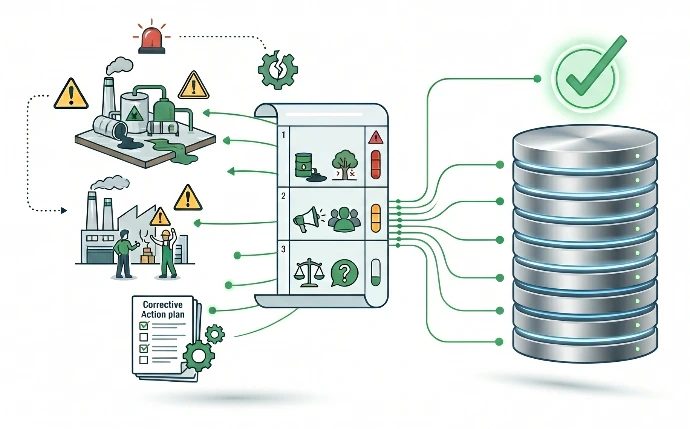
The module combines different ESG-related areas into a shared data structure. These include:
- Emissions data
- Policies and compliance documents
- Incidents and corrective actions
- Stakeholders and responsibilities
- Training and competency records
- Assessments and questionnaires
- Financial and KPI data
This creates a traceable and consistent data foundation for internal processes as well as external reporting obligations.
Emissions Management and Environmental Metrics
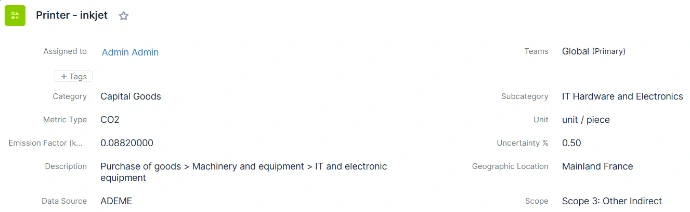
The addon includes an integrated emissions source database based on the ADEME database. This provides emission factors and uncertainty indicators for calculations and reporting.
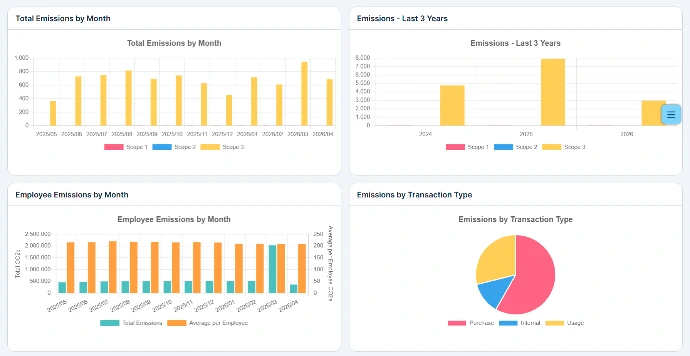
Emissions can be recorded using both quantity-based and expenditure-based methods. Consumption data can be linked directly to emission sources, enabling CO₂ calculations and environmental analyses within the system.
In addition, the module supports the automatic generation of emission metrics from sales activities. Products from the SugarAI product catalog can be used as emission sources to automatically derive Scope 1 and Scope 3 data.
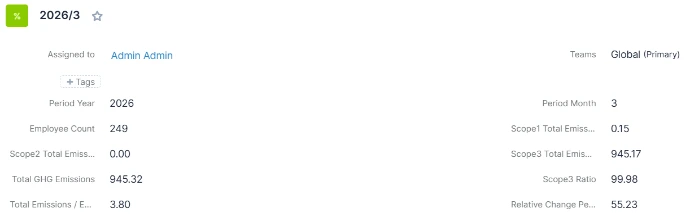
Mobility and fleet data can also be managed in detail. Based on this data, monthly emission metrics and environmental impact analyses can be generated.
Processes, Incidents, and Actions
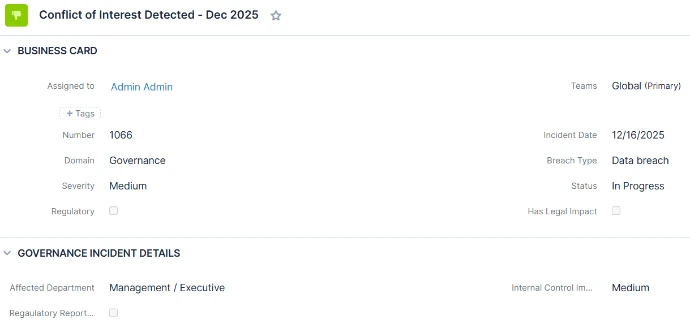
The ESG Addon enables the structured management of ESG-related incidents and events. Incidents can be categorized, evaluated, and linked to corrective actions.
A dedicated workflow area is available for Corrective and Preventive Actions (CAPA). Responsibilities, deadlines, and effectiveness reviews can be documented there. SugarAI tasks can be assigned directly to individual actions.
Policies, Training, and Responsibilities
Corporate policies and ESG-related documents can be managed together with their validity periods. This makes it possible to track which regulations were valid at a specific point in time.
People involved in ESG processes — such as employees, SugarAI users, or external contacts — are managed in a centralized stakeholder register. The module technically links these individuals with assessments, incidents, tasks, or actions.
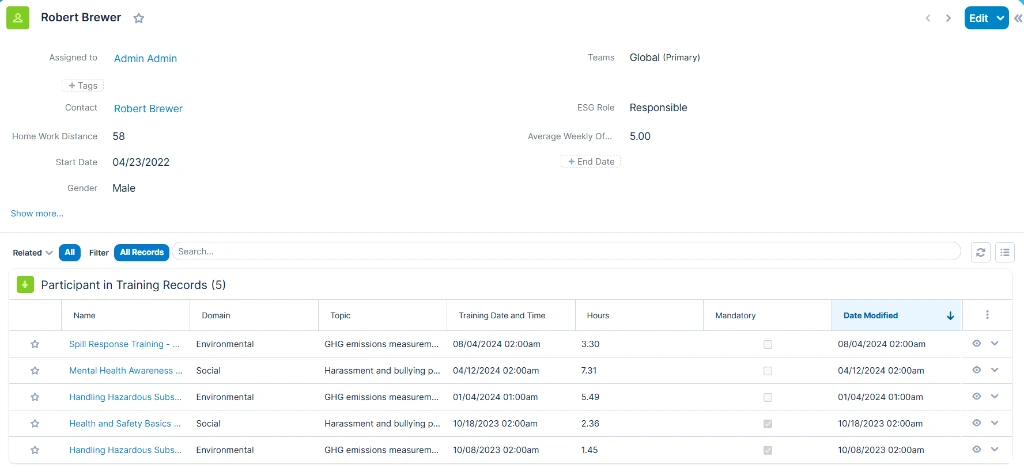
The system also supports the management of ESG training activities. Dates, participants, and topics can be documented and connected to policies or compliance requirements.
Assessments and Reporting
The addon provides functions for structuring assessments and questionnaires. Questions can be weighted, enabling more differentiated evaluation methods for internal audits or supplier assessments.
The data structure also supports the preparation of reports according to ESRS standards as well as the provision of XBRL-related data.
Based on the captured information, the system aggregates ESG metrics and KPIs on a monthly basis. This includes environmental, social, and governance data as well as economically relevant metrics such as revenue or salary-related data. Trends and intensity indicators can therefore be evaluated centrally.
Conclusion
The KINAMU Sugar ESG add-on extends Sugar with a structured foundation for ESG-related processes and reporting obligations. Companies receive an integrated system for managing sustainability data that supports both operational processes and reporting requirements.